
Understanding Human Resource Management
Listen to this lesson
Nigerian voice narration
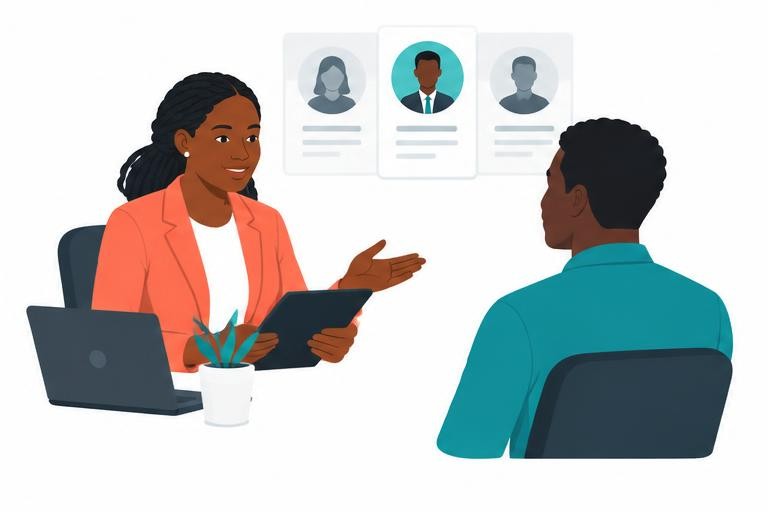
Fictional training case. Fictional case. You have just resumed as HR Assistant at Zamani Foods Ltd, a 45-staff food distribution company in Jos. On your first morning the Managing Director, Musa Danjuma, says: 'People think HR is just employment letters and salary talk. Explain to me what the department should actually be doing.' You have one hour to map the role before the management meeting.
Introduction and learning objectives
This lesson defines human resource management, explains why it matters, lists the main functions of an HR department, describes the day-to-day role of an HR officer, contrasts HR management with old-style personnel administration, and outlines the skills and challenges of the job. By the end you should be able to describe what HR does in a Nigerian organisation and map the work to a small team.
What human resource management is
Human resource management (HRM) is the practice of attracting, developing, supporting and keeping the people an organisation needs to do its work. It covers the whole staff journey: deciding a role is needed, recruiting, writing a contract, keeping records, paying correctly, training, appraising, handling complaints and managing exits. HR is not only a department; every supervisor manages people. The HR function supplies the systems, advice and fair process that make good people management possible.
Why HR matters to the organisation
People are usually the largest cost and the main source of value in a Nigerian office. Good HR protects the organisation from expensive hiring mistakes, payroll errors, legal claims, low morale and lost knowledge when staff leave. It also improves performance: clear job descriptions, fair targets, timely training and a safe complaints route help staff do their best. When HR is weak, managers spend their time firefighting and the organisation loses good employees to competitors.
Functions of an HR department
A typical HR department handles workforce planning and recruitment; employee records and documentation; onboarding and exits; attendance, leave and payroll administration; performance management; training and development; employee relations and discipline; policy and compliance; and HR reporting. In a small company one officer may do all of these. In a large organisation they are split into units. The functions depend on each other: a payroll error often begins with a missing record, and a grievance often begins with an unclear job description.
Roles and responsibilities of an HR officer
An HR officer's day includes preparing job adverts, screening applications, scheduling interviews, opening staff files, updating records, processing leave requests, checking attendance, preparing payroll inputs, drafting letters, advising supervisors and answering staff questions. The officer also protects confidentiality, keeps documents accurate and escalates legal or sensitive issues to management. The role is part administrator, part adviser and part guardian of fair process. Being trusted matters as much as being fast.
HR management versus personnel administration
Personnel administration is the older, record-keeping side: files, letters, attendance and payroll. HR management includes that administration but adds strategy: workforce planning, talent development, engagement, performance and culture. A personnel officer asks, 'Is the file complete?' An HR manager also asks, 'Will this role exist in three years, who can grow into it, and why are good staff leaving?' Both are necessary. The difference is whether people decisions are only processed or also planned.

Build the prompt from three phrases — Role, Task and Format — and watch the AI answer.
Qualities and skills of a good HR professional
Useful HR skills include clear writing, careful record-keeping, confident questioning, active listening, spreadsheet literacy and basic knowledge of employment rules. Good HR officers are discreet, fair, calm under pressure and consistent. They explain decisions plainly and do not promise what policy does not allow. They also keep learning: HR software, data protection and AI tools are changing the work. Integrity is the core skill because HR sees salaries, disputes and personal information that must never be casually shared.
Challenges facing modern HR departments in Nigeria
Common challenges include paper files that are hard to find, inconsistent staff data across departments, manual payroll and attendance records, limited budgets for training, high turnover in some sectors, weak succession planning and managers who bypass HR. HR also has to apply Nigerian employment and data protection requirements while dealing with informal practices. Digital tools help, but only if records are clean and access is controlled. The practical response is to simplify processes, digitise gradually and document decisions.
Step-by-step: map the HR function in a small company
1) List every people task the company currently performs, from recruitment to exit. 2) Group the tasks into the functions above. 3) Mark who does each task today and whether it is documented. 4) Identify the three riskiest gaps, for example no offer-letter template or no leave tracker. 5) Assign an owner and a simple tool to each gap. 6) Create a one-page HR calendar showing monthly, quarterly and annual tasks. 7) Review the map with management and update it every quarter.
Common mistakes to avoid
Common mistakes are treating HR as only letter-writing, keeping staff data in personal notebooks, allowing supervisors to hire without criteria, sharing salary information casually, and copying a policy from the internet without checking whether it fits Nigerian law or the organisation. Another mistake is promising a candidate a benefit that the contract does not contain. HR must be accurate, consistent and discreet; a single careless promise can become a dispute.
Practice exercise
Write a one-page map for Zamani Foods Ltd. List at least eight people tasks, group them under the HR functions, and name the person who should own each. Mark three tasks that must be done monthly and one that is currently missing. Finish with two sentences explaining how the map would help the Managing Director.
Lesson summary
HRM covers the whole employee journey: planning, recruiting, recording, paying, developing, supporting and exiting staff. It includes personnel administration but adds planning and performance. A good HR officer combines accuracy, confidentiality, fairness and practical tool skills. Mapping the function reveals gaps before they become disputes.
Open ChatGPT (free tier) and paste this prompt there. Explains HR terms in plain language and suggests how a small Nigerian office can organise the function.
You are an HR mentor for a small Nigerian company. Explain the difference between HR management and personnel administration, and list six tasks a one-person HR office should perform as a two-column comparison table followed by a six-item task list.
Why this tool: Explains HR terms in plain language and suggests how a small Nigerian office can organise the function.
Hit a free limit? Switch to ChatGPT or Gemini and continue — the prompt works in any assistant.
Answer all three questions and check your answers to unlock the next lesson. Pass mark: 2 of 3.
The main purpose of HRM is to…
Which quality is most important when handling salary and personal records?
A supervisor bypasses HR and promises a candidate a housing allowance not in the approved offer. The main risk is…