
Understanding Customer Service
Listen to this lesson
Nigerian voice narration
Fictional training case. Fictional case. It is your first morning as a Customer Service Officer at Amana Home Stores, a household-goods retailer in Kaduna with one shop, a telephone line and a Facebook page. A woman is waiting at the counter with a faulty kettle, the phone is ringing, and the manager says: 'Customers keep saying our service is poor, but nobody can tell me what to fix. Spend today learning how service actually works.'
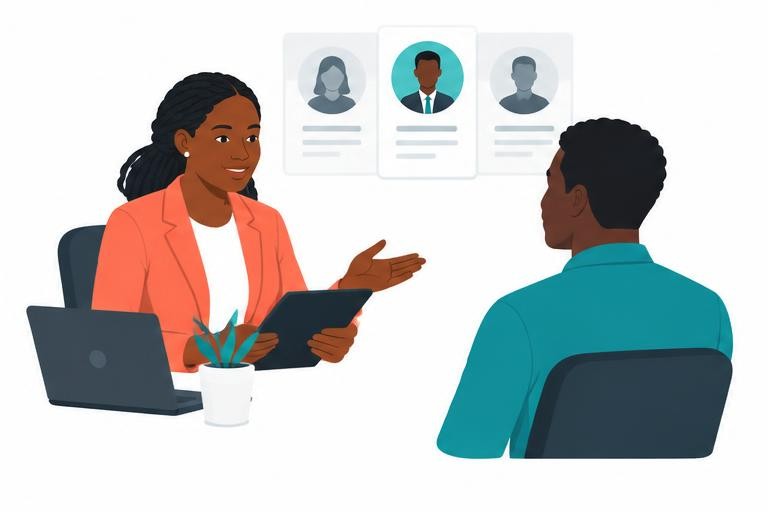
Introduction and learning objectives
This lesson explains what customer service is, why it matters to a Nigerian business, how customers form expectations, the types of customers you will meet, the habits of excellent service, the duties of a service officer, how service differs from support, and the challenges that make service hard. By the end you should be able to describe good service in plain words and identify what a small business must fix first.
What is customer service?
Customer service is every interaction that helps a customer before, during and after a purchase. It includes answering a question, explaining a product, processing a payment, arranging delivery, handling a complaint and following up. It is not only what a service officer does: the cleaner who keeps the shop comfortable, the rider who calls before arriving and the accounts clerk who corrects an invoice all shape what the customer experiences. Service is a promise kept consistently, not a special favour.
Why customer service matters in business
In a crowded market, price and products are easy to copy; service is harder to copy. Good service brings repeat purchases, referrals and calm customers who forgive small mistakes. Poor service spreads quickly through WhatsApp groups and online reviews and can cost more than the original problem. For a Nigerian small business, one unhappy customer may influence a family, a church group or a whole market association. Service protects revenue, reputation and the cost of fixing avoidable problems.
Understanding customer expectations
Customers judge service against what they expected, not against your effort. Expectations come from adverts, previous visits, competitors, friends and the price paid. A customer who paid ₦85,000 for a blender expects a working product, a receipt and a clear return rule. A customer buying a ₦1,500 plastic bucket expects speed and courtesy, not a demonstration. State what you can deliver, deliver it on time, and explain honestly when something changes. Unclear promises create most disappointment.
Types of customers
You will serve walk-in customers who want speed, telephone customers who need clarity, online customers who cannot see the product, repeat customers who expect recognition, and business customers who need invoices and reliable records. Some are calm, some anxious, some angry and some indecisive. Classify the need, not the person: urgent, technical, complaint, price-sensitive or relationship-building. This helps you choose the right tone and route without stereotyping people by age, gender, tribe or religion.
Characteristics of excellent customer service
Excellent service is prompt, accurate, courteous, consistent and honest. Prompt means acknowledging quickly and giving a realistic time. Accurate means checking facts before promising. Courteous means respectful words and tone even when the customer is rude. Consistent means the same standard on Monday morning and Saturday evening. Honest means saying 'I do not know, let me check' instead of inventing an answer. Add ownership: the officer records the issue and follows it until someone resolves it.
Roles and responsibilities of a customer service officer
A service officer greets and listens, answers questions, explains products and policies, records customer details, logs complaints, follows up, collects feedback and reports repeating problems. The officer also protects confidential information, escalates what exceeds their authority and keeps promises about callbacks. In a small business the role may include social media replies and stock checks. Authority limits must be clear: a junior officer should know the highest discount, refund or replacement they can approve without a supervisor.

Build the prompt from three phrases — Role, Task and Format — and watch the AI answer.
Customer service versus customer support
Customer service is the broad relationship: welcoming, advising, selling, resolving and retaining. Customer support is the narrower help after a purchase, especially for products that need setup, repair or technical help. A shop assistant explaining a kettle is service; the person helping a customer reset a smart kettle is support. The two overlap, and customers do not care about the distinction. Internally, the difference matters because support needs product knowledge, ticket records and response targets.
Common customer service challenges
Common challenges include long queues, unreliable power and internet, unclear return policies, stock-outs, delayed deliveries, staff shortages, rude or exhausted colleagues, and managers who overrule front-line promises. Customers may also arrive angry about something that happened elsewhere. The practical response is to separate the problem from the emotion, record facts, communicate realistic timelines and escalate early. Blaming another department in front of the customer damages trust; explain the process and own the next step.
Step-by-step: a first-day service audit
1) Walk the customer path from entrance to exit and note every point of contact. 2) List the questions customers ask most often and whether staff can answer them consistently. 3) Check the phone, WhatsApp, email and social media response times. 4) Review the return, refund and delivery rules for gaps. 5) Ask three staff what slows them down. 6) Record the five biggest friction points. 7) Propose one fix for each, with an owner and a date. 8) Share the list with the manager and agree how success will be measured.
Common mistakes to avoid
Common mistakes are greeting only customers who look wealthy, promising a refund without checking policy, arguing to prove the customer wrong, ignoring phone calls during busy periods, discussing one customer's issue in front of another, and treating social media as less important than the shop. Another mistake is failing to record complaints, so the same fault repeats. Service improves when every contact is treated as evidence of what the business must fix.
Practice exercise
Using the downloadable customer expectations sheet, list eight expectations for Amana Home Stores across the shop, telephone and Facebook. For each, write what good service looks like and one measure the manager could check weekly. Then write a 120-word note explaining the difference between customer service and customer support, using one example from the store.
Lesson summary
Customer service is every interaction that helps a customer, and it depends on clear promises, accurate information and consistent ownership. Excellent service is prompt, accurate, courteous, consistent and honest. Service and support overlap but need different internal systems. A simple service audit turns vague complaints into specific fixes.
Open ChatGPT (free tier) and paste this prompt there. Explains customer service terms in plain language and suggests a first service audit for a small shop.
You are a customer service trainer for a Nigerian retail business. Explain the difference between customer service and customer support and list six daily duties of a customer service officer as a two-column comparison followed by a six-item duty list.
Why this tool: Explains customer service terms in plain language and suggests a first service audit for a small shop.
Hit a free limit? Switch to ChatGPT or Gemini and continue — the prompt works in any assistant.
Answer all three questions and check your answers to unlock the next lesson. Pass mark: 2 of 3.
A customer asks for a refund you are not authorised to approve. The best first step is to…
Why do unclear promises cause disappointment?
Which is customer support rather than general customer service?